Explore the foundational research, objectives, and methodologies behind the Real-Time SIEM-Based Cybersecurity Framework for IoMT Environments.
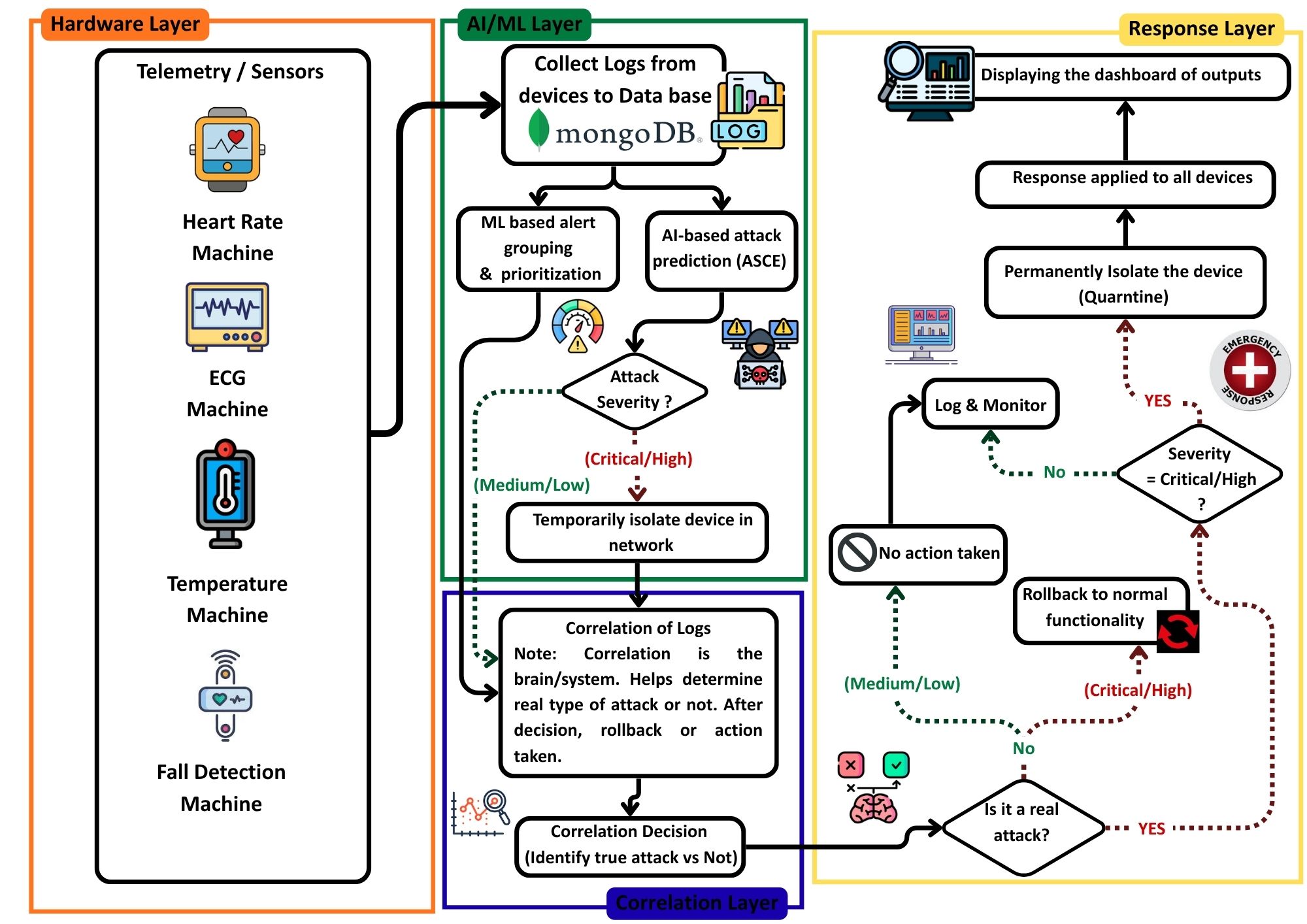
The rapid growth of the Internet of Medical Things (IoMT) has reshaped healthcare by connecting life-critical devices. While this improves efficiency, it exposes severe cybersecurity risks due to outdated firmware and proprietary communication protocols. Conventional IDS and SIEMs struggle against zero-day medical vulnerabilities and lack healthcare-specific context like automatic PHI redaction and offline capabilities.
A multi-phase approach to building a resilient IoMT security framework.
Capturing live MQTT, HL7, and DICOM traffic via Suricata sensors and specialized lightweight agents.
Processing data through hybrid ensemble models optimized for edge devices using quantization and pruning.
The AICE engine clusters alerts to generate severity scores and triggers automated containment scripts.
The specialized technical capabilities that distinguish our 4-layer IoMT framework.
An intelligent engine that fuses heterogeneous alerts from network and host layers to reduce false positives by 40%.
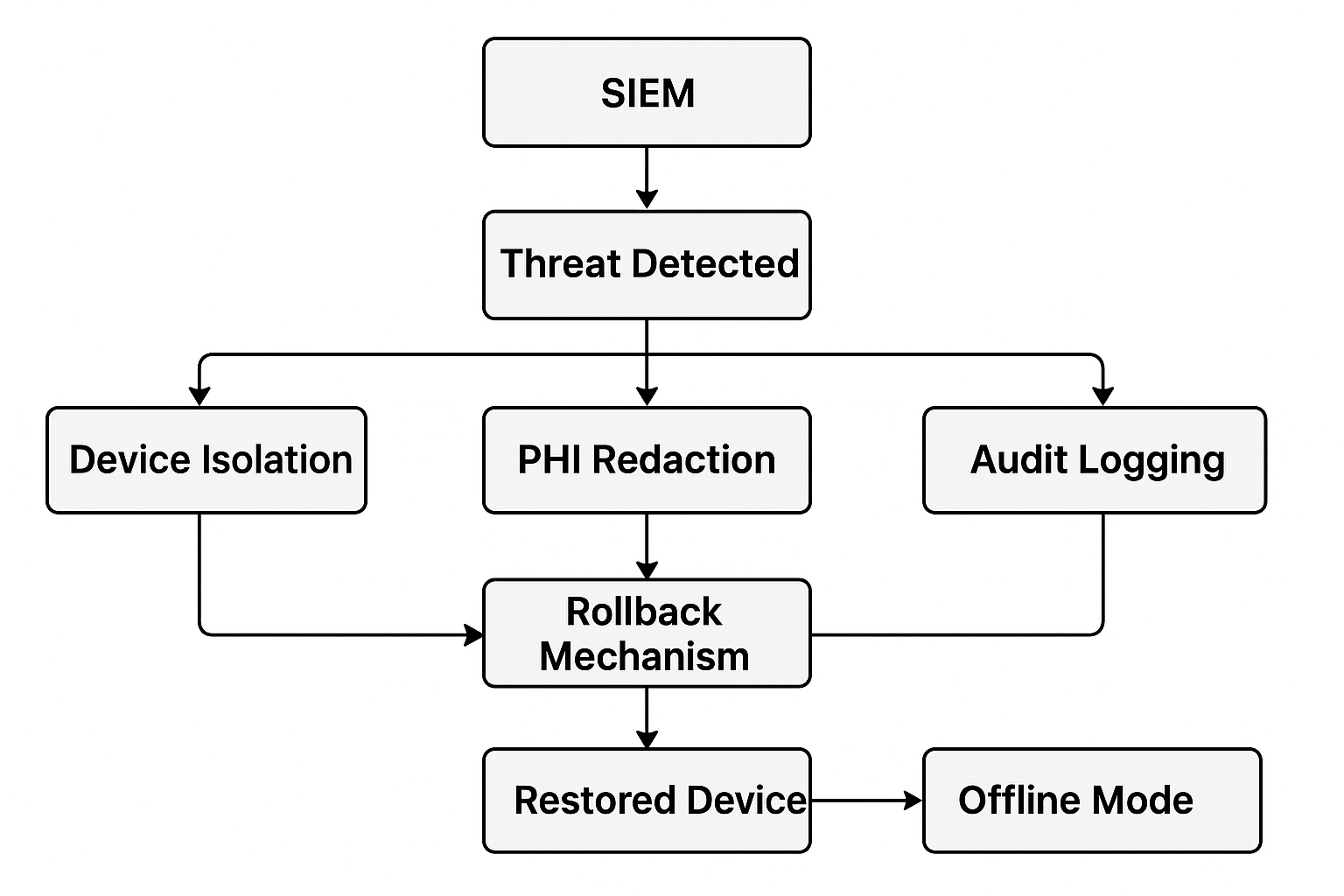
Ensuring HIPAA compliance through AI-driven masking of sensitive patient health information in real-time telemetry.
Autonomous containment protocol that predicts and isolates infected sensor nodes in <30s to prevent lateral movement.
Integrated hardware mechanism to automatically restore compromised sensor firmware to a verified "last-known-good" state.
Specially pruned ML models designed to run on resource-constrained ESP32 nodes without compromising detection accuracy.
Seamless bidirectional communication between Hardware, AI, Correlation, and Response layers for unified defense.
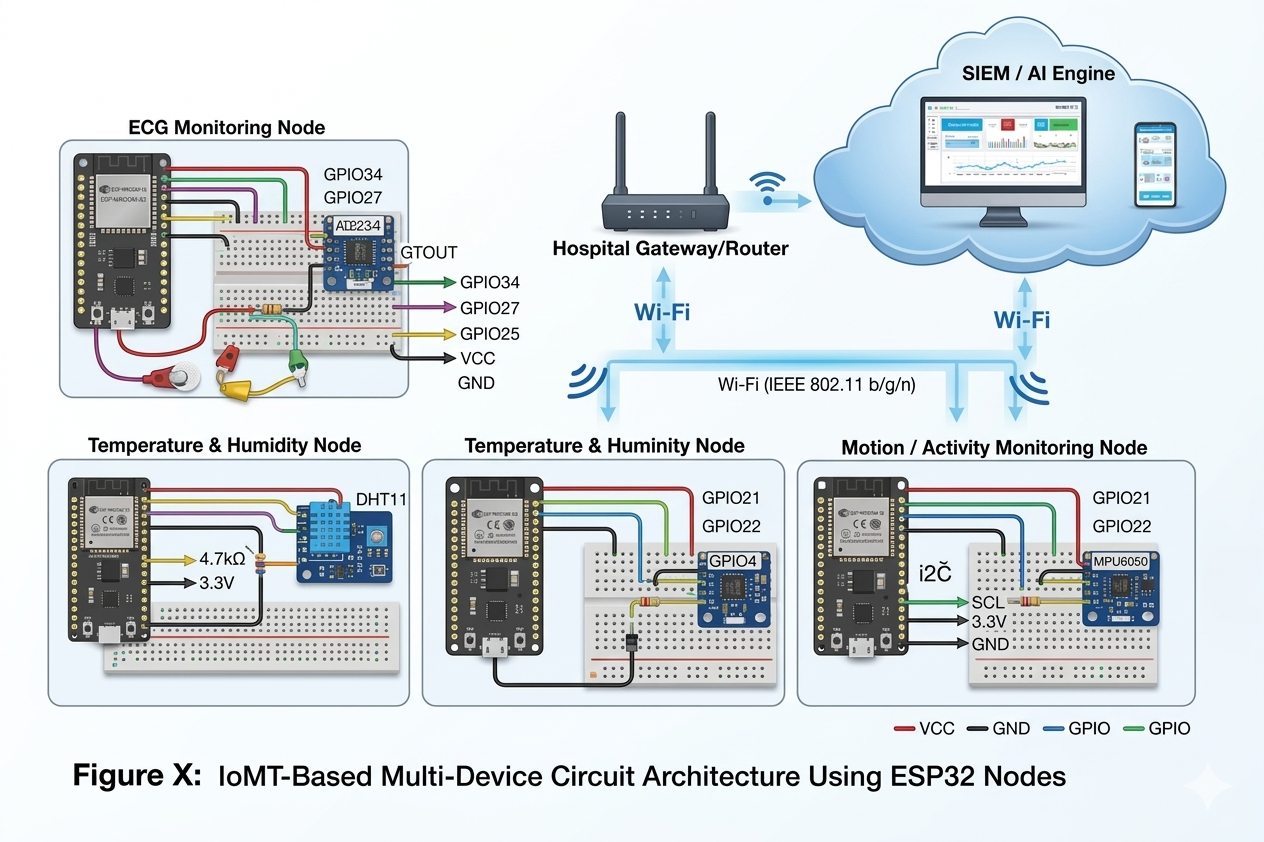
From schematic to silicon: Validating the framework on physical medical nodes.
Wazuh SIEM, ELK Stack, Suricata IDS, Apache Kafka
TensorFlow Lite, Scikit-Learn, SHAP, Python 3.10
ESP32 Nodes, Raspberry Pi 4 Gateways, Docker, MQTT